
“Unlocking the Potential of Adaptogens: Your Natural Stress Relievers”

Hey there, busy bees! In this fast-paced world, stress seems to be an unwelcome guest in our lives. But fear not, because Mother Nature has a secret weapon to combat stress and restore balance—adaptogens! Throughout the ages, these extraordinary herbs and plants have stood as loyal companions, supporting our bodies in navigating through stress and nurturing holistic well-being. Step with me now into the captivating realm of adaptogens, where we unravel the secrets of these natural stress relievers and embrace their wondrous benefits.. Cracking the Code of Adaptogens In the realm of herbal wonders, adaptogens shine as true superstars, boasting an extraordinary gift—the innate capacity to harmonize perfectly with our body’s unique requirements. Their magical prowess lies in regulating our stress response and bolstering essential physiological functions. From relentless workdays to overwhelming schedules or personal hurdles, adaptogens swoop in as our unwavering allies, empowering us to cope with grace and stand resilient in the face of adversity. Revealing the Marvels of Adaptogens One of the most remarkable attributes of adaptogens is their profound capacity to regulate stress hormone levels, including cortisol. When faced with heightened stress, cortisol floods our system, leading to feelings of anxiety, fatigue, and potential health issues. However, adaptogens step in to restore balance, helping to alleviate these negative effects and promoting a sense of calm and well-being.. This is precisely where adaptogens come to our rescue, skillfully restoring cortisol levels to equilibrium and fostering a tranquil and serene state of being. Unveiling the Realm of Top Adaptogens and Their Incredible Advantages Let’s take a closer look at some of the most popular adaptogens and the incredible benefits they offer: 1. Ashwagandha: Your Ultimate Stress Buster Ashwagandha, affectionately known as Indian Ginseng, stands as a powerful stress buster. This remarkable adaptogen has earned its reputation for its exceptional capacity to alleviate stress and anxiety, promoting a sense of calm and relaxation. By enhancing our body’s natural stress defenses, Ashwagandha helps us navigate through life’s challenges with ease. Plus, it’s a great ally for improving sleep quality, ensuring we wake up refreshed and ready to take on the day. 2. Rhodiola Rosea: The Mood Booster When mental fatigue sets in, Rhodiola Rosea comes to the rescue as a powerful mood booster. This adaptogen works wonders for combating mental fatigue and improving focus and cognitive function. Whether it’s a demanding workday or an intense study session, Rhodiola Rosea enhances concentration and mental clarity, helping us stay on top of our game. 3. Holy Basil (Tulsi): The Immune Supporter Holy Basil, also known as Tulsi, has been treasured in Ayurvedic medicine for its exceptional immune-boosting properties. Rich in antioxidants and anti-inflammatory compounds, Holy Basil helps strengthen our immune system, making it an invaluable companion during stressful periods. Additionally, it can promote a sense of overall well-being, supporting both physical and mental health. Each of these popular adaptogens brings something unique to the table, and incorporating them into our daily routine can lead to a more balanced and stress-free life. Remember, nature has a remedy for almost everything, and adaptogens are nature’s way of helping us stay resilient in the face of life’s challenges. Discover the transformative potential of adaptogens and unleash their incredible benefits to nurture a healthier, happier version of yourself! Incorporating Adaptogens into Your Daily Routine Incorporating adaptogens into our daily routine is a breeze! You can find them in diverse formats, such as capsules, powders, and teas. You can whip up a calming cup of adaptogenic tea before bedtime or simply add adaptogenic powder to your morning smoothie for an energetic start to the day. Safety and Considerations Although adaptogens are generally safe for the majority of individuals, it is advisable to seek advice from a healthcare professional, particularly if you are pregnant, breastfeeding, or currently on medications. As with any supplement, moderation is key, and it’s best to follow recommended dosages. So there you have it, nature’s stress relievers—adaptogens! These incredible gifts from Mother Earth can help us sail through life’s challenges with grace and calmness. Remember to listen to your body, take a moment to unwind, and embrace the power of adaptogens for a healthier and happier you. Here’s to a stress-free, well-balanced life!
Beyond Boundaries: Unleashing Quantum Supremacy with Google’s Sycamore Quantum Computer
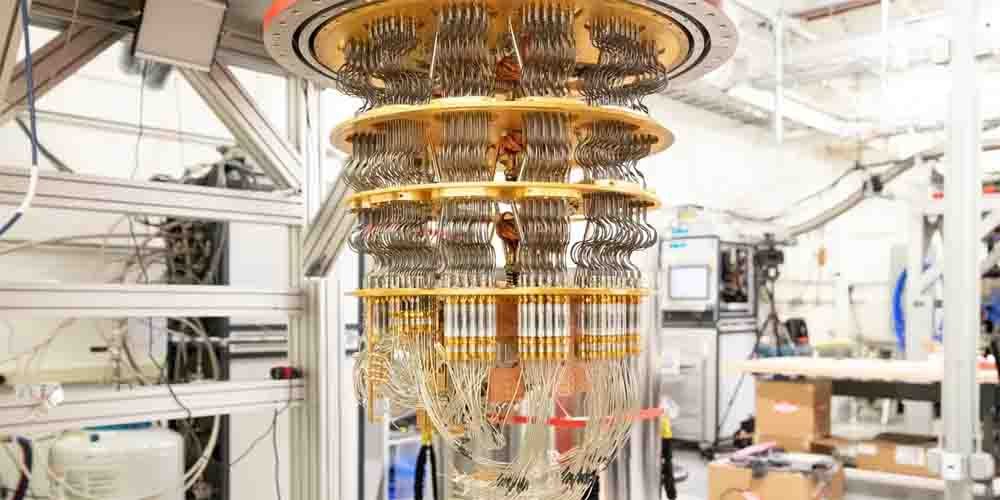
In October 2019, Google made headlines in the scientific community when it announced a major breakthrough in quantum computing. Its state-of-the-art quantum computer, Sycamore, achieved a milestone known as “quantum supremacy.” This groundbreaking achievement marked a significant leap forward in the world of computing, promising to revolutionize various industries and scientific fields. In this article, we delve into the fascinating world of Google’s Sycamore and explore the potential impact of quantum supremacy. Understanding Quantum Supremacy Quantum supremacy refers to a moment when a quantum computer performs a specific task exponentially faster than even the most advanced classical supercomputers. The concept hinges on harnessing the principles of quantum mechanics, a branch of physics that explores the behavior of matter and energy at the atomic and subatomic levels. Unlike classical computers, which use bits to store and process information as 0s and 1s, quantum computers utilize quantum bits or qubits. Qubits can exist in multiple states simultaneously, thanks to the phenomenon known as superposition. Additionally, they can be entangled, meaning the state of one qubit is dependent on the state of another, even if separated by vast distances. Google’s Quantum Leap: The Sycamore Processor Google’s Sycamore is an advanced quantum processor built to demonstrate quantum supremacy. It consists of 54 qubits, each represented by tiny circuits known as superconducting loops. These qubits are cooled to near absolute zero temperatures to prevent any interference from the outside environment, a requirement for maintaining their delicate quantum state. Sycamore’s breakthrough moment came when it solved a specific mathematical problem in just over 200 seconds—a task that would take the world’s most advanced classical supercomputers thousands of years to complete. This quantum computational power showcased the potential of quantum computing to transform how we approach complex problems and simulations. Potential Applications of Quantum Supremacy Quantum supremacy opens up a world of possibilities for solving complex problems that have been beyond the reach of classical computing capabilities. Some potential applications include: 1. Drug Discovery and Material Science: Quantum computers could revolutionize the process of discovering new drugs and materials by efficiently simulating molecular interactions and properties, dramatically accelerating research in these fields. 2. Cryptography and Cyber security: Quantum computers have the potential to crack some of the most sophisticated encryption algorithms currently in use. However, they can also lead to the development of quantum-resistant cryptographic techniques, bolstering cyber security in the quantum era. 3. Optimization Problems: Quantum computers excel at solving optimization problems, such as logistics, supply chain management, and financial modeling, leading to more efficient solutions and cost savings. 4. Climate Modeling: Quantum simulations can improve climate modeling and help researchers gain a deeper understanding of climate change, enabling better predictions and informed decision-making. Challenges on the Path to Quantum Supremacy While Google’s achievement with Sycamore is remarkable, quantum supremacy is just the beginning of the quantum computing journey. Several challenges remain on the path to harnessing the full potential of quantum computing: 1. Error Correction: Quantum computers are highly sensitive to noise and errors, which can quickly propagate through quantum circuits. Error correction techniques are essential to maintaining the integrity of quantum computations. 2. Scalability: Building large-scale quantum processors with a significant number of qubits is a formidable engineering challenge. Scaling quantum systems while preserving qubit coherence is crucial for tackling more complex problems. 3. Quantum Algorithms: Developing efficient quantum algorithms optimized for different applications is an ongoing area of research. The challenge lies in determining the best approach to leverage quantum capabilities for specific tasks. 4. Quantum Hardware and Stability: Quantum computers require extremely low temperatures and precise control to maintain qubit coherence. Achieving stability and fault-tolerance in quantum hardware is vital for practical applications. As researchers and engineers continue to address the challenges of error correction, scalability, and quantum algorithms, we can expect quantum computing to play an increasingly prominent role in shaping the future of technology and scientific exploration. Quantum supremacy is just the beginning—exciting developments and applications lie ahead as we unlock the full power of quantum computing.
Finding Serenity: Harnessing the Power of Meditation for Stress and Anxiety Relief

In today’s fast-paced and demanding world, stress and anxiety have become pervasive issues that impact the well-being of millions. The constant pressures of work, personal life, and the relentless digital connectedness can leave individuals feeling overwhelmed and mentally exhausted. While stress and anxiety are natural responses to life’s challenges, chronic levels of these feelings can take a toll on our physical and mental health. In the quest for relief, many individuals have turned to meditation as a powerful and effective tool to find inner calm, manage stress, and alleviate anxiety. Meditation is an ancient practice that has been cultivated and refined over thousands of years. Rooted in various spiritual and cultural traditions, meditation involves training the mind to focus and redirect thoughts. It encourages practitioners to be present in the moment, letting go of distractions and worries about the past or future. The essence of meditation lies in cultivating mindfulness and awareness. It is not about emptying the mind of thoughts, but rather observing them without judgment and gently guiding the mind back to a chosen point of focus, such as the breath or a specific mantra. The growing interest in meditation as a stress and anxiety relief tool is supported by a substantial body of scientific research. Numerous studies have demonstrated the positive impact of meditation on mental health, showing that regular practice can result in the following benefits: 1. Stress Reduction: Meditation activates the body’s relaxation response, which helps to counteract the effects of the stress response. By promoting a sense of calm and tranquility, meditation helps lower cortical levels, the hormone associated with stress. 2. Anxiety Management: Through regular practice, meditation can help individuals become more aware of their thought patterns and emotional reactions. This increased self-awareness enables them to manage anxiety-inducing thoughts and break free from the cycle of worry. 3. Enhanced Emotional Well-Being: Meditation fosters a sense of emotional stability and resilience. It can reduce symptoms of depression and increase feelings of happiness and contentment. 4. Improved Focus and Concentration: The practice of meditation strengthens the mind’s ability to sustain attention and concentrate on tasks, leading to increased productivity and effectiveness in daily life. 5. Better Sleep: By promoting relaxation and reducing anxiety, meditation can lead to improved sleep quality and better overall rest. Different Types of Meditation for Stress and Anxiety Relief Meditation comes in various forms, each with its unique techniques and approaches. It is essential to explore and find a style of meditation that resonates with individual preferences and goals. Some popular meditation practices for stress and anxiety relief include: <a>Mindfulness Meditation: Involves paying non-judgmental attention to the present moment, acknowledging thoughts, feelings, and sensations without attachment or resistance. <b>Guided Meditation: Involves listening to a meditation instructor or recording that guides participants through a specific meditation practice, often focusing on relaxation and visualization. <c>Loving-Kindness Meditation: Focuses on generating feelings of compassion and love towards oneself and others, which can be particularly helpful in reducing feelings of isolation and fostering a sense of connection. <d>Transcendental Meditation (TM): A form of mantra meditation that involves silently repeating a specific word or phrase to calm the mind and achieve a state of deep relaxation. <e>Body Scan Meditation: Involves systematically scanning the body to cultivate awareness of physical sensations and release tension. Incorporating meditation into daily life doesn’t require elaborate rituals or long periods of time. Even a few minutes of daily practice can yield significant benefits. Here are some tips to get started: A. Find a Quiet Space: Choose a quiet and comfortable space where you won’t be disturbed. It could be a corner in your home, a park, or any tranquil setting that allows you to focus without distractions. B. Set Realistic Goals: Start with short meditation sessions, such as 5 to 10 minutes, and gradually increase the duration as you become more comfortable with the practice. C. Be Consistent: Establish a regular meditation routine, ideally at the same time each day. Consistency is key to experiencing the full benefits of meditation. D. Focus on Your Breath: One of the simplest meditation techniques is to focus on your breath. Observe the sensation of your breath as it moves in and out of your body, gently bringing your attention back whenever your mind starts to wander. E. Be Patient and Kind to Yourself: Meditation is a skill that develops with practice. Don’t be too hard on yourself if you find it challenging at first. Be patient and approach your practice with kindness and self-compassion. Meditation is a transformative practice that empowers individuals to find peace and stillness amidst life’s challenges. As a powerful tool for stress and anxiety relief, meditation offers a path to inner calm, improved mental well-being, and a more balanced life. By dedicating a few moments each day to this ancient practice, individuals can cultivate mindfulness, strengthen their emotional resilience, and embrace the present moment with a sense of clarity and purpose. Ultimately, meditation provides a sanctuary of tranquility in a hectic world, guiding individuals toward a more harmonious and fulfilling existence.
Proton Therapy: Precision in the Fight Against Cancer

In the realm of cancer treatment, medical advancements have constantly sought to improve patient outcomes and minimize side effects. Proton treatment, a form of particle therapy, has emerged as a promising solution in the fight against cancer. This innovative approach utilizes protons, tiny particles with unique properties, to deliver targeted radiation directly to tumor cells while sparing healthy tissues. Proton therapy offers a powerful and precise tool that has the potential to revolutionize cancer care and significantly enhance the quality of life for patients undergoing treatment. How Proton Treatment Works To understand the mechanics of proton therapy, one must first grasp the nature of protons themselves. Protons are positively charged particles found in the nucleus of atoms. Unlike traditional radiation therapy, which uses X-rays or gamma rays that pass through the body and deposit energy along their path, proton therapy involves accelerating protons to high speeds and directing them precisely to the tumor site. The proton beam is carefully shaped to match the size and shape of the tumor, allowing for optimal tumor targeting. Once the protons reach the tumor, they deposit most of their energy directly into the cancerous cells, delivering a higher radiation dose precisely where it is needed. As a result, proton therapy minimizes exposure to surrounding healthy tissues and vital organs, reducing the risk of collateral damage and long-term side effects. Advantages over Conventional Radiation Therapy Proton therapy offers several significant advantages over conventional radiation therapy, making it an attractive option for specific cancer cases. Firstly, the ability to target tumors with enhanced precision reduces the risk of damage to nearby critical structures, such as the heart, lungs, and spinal cord. This precision is particularly crucial for treating tumors located in sensitive areas or near vital organs. Moreover, proton therapy is highly effective in treating complex tumors with irregular shapes or those located in difficult-to-reach areas. It is especially beneficial for treating pediatric cancers, where preserving healthy tissues is vital to a child’s long-term well-being. The ability to precisely target pediatric tumors enables higher treatment doses, leading to improved outcomes with reduced long-term side effects. Benefits and Applications 1.Precise Tumor Targeting and Reduced Side Effects Proton treatment’s hallmark feature is its ability to provide highly targeted radiation. This precision allows for higher radiation doses to be delivered directly to the tumor, maximizing its effectiveness while minimizing damage to surrounding tissues. As a result, patients experience fewer acute and long-term side effects, leading to an improved quality of life during and after treatment. 2.Treating Complex and Sensitive Cases Proton therapy is particularly advantageous in treating tumors located in challenging or sensitive regions of the body. For instance, brain tumors, spinal tumors, and prostate cancer cases can benefit greatly from the ability to target tumors with millimeter precision, thereby avoiding critical nearby structures. 3.Proton Therapy for Pediatric Cancer Patients Pediatric cancer patients stand to gain the most from proton therapy. Children’s growing bodies are more susceptible to the long-term effects of radiation, and preserving healthy tissues is of paramount importance. Proton therapy’s ability to deliver targeted radiation precisely to the tumor area offers hope for improved survival rates and reduced long-term complications in young patients. Future Prospects and Challenges As proton therapy continues to gain traction in the medical community, ongoing research and advancements are essential to further optimize treatment outcomes. More clinical trials and studies are needed to assess the long-term efficacy and compare the benefits of proton therapy with conventional treatments in various cancer types. One of the primary challenges faced in the widespread adoption of proton therapy is accessibility. Currently, there are a limited number of proton therapy centers worldwide, and the cost of building and operating such facilities can be significant. As research and technology continue to advance, efforts to expand access to proton therapy must be a priority to ensure that more patients can benefit from this transformative treatment. Integrating Proton Therapy into Mainstream Cancer Care As proton therapy evolves, its integration into mainstream cancer care becomes increasingly important. Collaborations between healthcare providers, research institutions, and insurance providers are essential to support the expansion of proton therapy centers and improve patient access. Additionally, education and awareness among healthcare professionals and patients will help ensure that proton therapy is considered as a viable treatment option for appropriate cases. Proton treatment has emerged as a precise and powerful therapy in the fight against cancer. Its ability to deliver targeted radiation directly to tumors while sparing healthy tissues offers hope for improved outcomes and reduced side effects in cancer patients. Proton therapy represents a transformative approach that holds the potential to revolutionize cancer care, especially in cases where precision is paramount, such as pediatric cancers and complex tumors. As research and technology continue to advance, and accessibility to proton therapy centers expands, this innovative treatment will likely become an integral part of mainstream cancer care. By harnessing the power of protons, medical professionals are poised to usher in a new era of cancer treatment that emphasizes improved quality of life and better long-term outcomes for patients facing this formidable disease.
Plastic Pollution: Unmasking the Silent Threat to Our Planet

Plastic pollution refers to the widespread contamination of the environment with plastic waste, posing a severe threat to ecosystems and human health. Plastics, with their versatile properties and convenience, have become an integral part of modern life, from single-use items like bottles and bags to durable products used in various industries. However, the unintended consequences of plastic’s durability and improper waste management have led to a global environmental crisis. Since its inception in the mid-20th century, plastic production has skyrocketed, reaching over 368 million metric tons in 2019 alone. The ease of manufacturing, affordability, and lightweight nature of plastics have contributed to their pervasive use across industries and daily life. Unfortunately, this massive production has resulted in large quantities of plastic waste that take centuries to decompose. Consequently, plastic pollution has become one of the most pressing environmental challenges of our time. Causes and Sources of Plastic Pollution One of the primary contributors to plastic pollution is the widespread use of single-use plastics. Items such as plastic bags, water bottles, straws, and food packaging are designed for single-time use but persist in the environment for hundreds of years. The convenience and affordability of these disposable products have led to their ubiquitous presence in our daily lives. Unfortunately, many of these items are improperly disposed of, ending up in landfills, rivers, and oceans. Lack of proper waste management infrastructure is a significant factor contributing to plastic pollution. In many regions, waste collection, recycling, and disposal systems are insufficient or nonexistent. As a result, a considerable portion of plastic waste ends up as litter in the environment. Even in areas with waste management facilities, littering remains a prevalent issue, with individuals carelessly discarding plastic items on streets, beaches, and natural habitats. Micro plastics, tiny particles less than 5mm in size, pose a unique and invisible threat to the environment. They are created through the fragmentation of larger plastic items, such as bottles and bags, or are intentionally manufactured in some cosmetic and personal care products. These tiny particles can be found in water bodies, soil, and even in the air we breathe. Microplastics not only contaminate ecosystems and endanger marine life but also have the potential to enter the food chain and pose risks to human health. Plastic pollution is also driven by industrial and commercial activities. Industries that produce and utilize plastic materials generate significant plastic waste during manufacturing processes. Additionally, commercial sectors such as agriculture, construction, and fishing contribute to plastic pollution through the use and improper disposal of plastic products and materials.Improper disposal of plastic waste in landfills leads to the gradual release of toxic chemicals from the plastics into the soil and groundwater. When plastics are incinerated, they release harmful pollutants into the atmosphere, contributing to air pollution and climate change. Impact on Ecosystems and Wildlife Plastic pollution has taken a significant toll on marine life, particularly in the world’s oceans. Marine animals, such as seabirds, sea turtles, seals, and whales, often mistake plastic debris for food or become entangled in plastic materials. Ingestion of plastics can lead to internal injuries, digestive blockages, and malnutrition, ultimately resulting in injury or death. Furthermore, plastic waste can smother coral reefs and disrupt vital habitats, diminishing biodiversity and affecting entire marine ecosystems. While marine environments bear the brunt of plastic pollution, terrestrial ecosystems are not exempt from its effects. Littered plastic waste accumulates on land and poses hazards to wildlife, including birds and small mammals. Plastic fragments, carried by wind and water, contaminate soil, rivers, and lakes, leading to ecological imbalances and negatively impacting plant growth and soil health. Plastic pollution’s reach extends beyond wildlife and ecosystems, as it enters the food chain and poses potential risks to human health. Small marine organisms ingest micro plastics, which are then consumed by larger fish. These plastic particles accumulate as they move up the food chain, ultimately reaching humans who consume seafood. Studies have detected micro plastics in seafood and drinking water, raising concerns about the long-term health implications of plastic ingestion on humans. Plastics are composed of various chemicals, some of which are known to be toxic and harmful. As plastics break down in the environment, they release these chemicals, leading to chemical contamination of soil and water. This leaching of toxins not only threatens aquatic and terrestrial organisms but also poses potential risks to human populations, especially in areas where plastic pollution is most severe. Plastic pollution poses economic challenges to industries dependent on healthy marine ecosystems. Fisheries may suffer from declining fish populations due to plastic ingestion, affecting food security and livelihoods of coastal communities. Additionally, the presence of plastic debris on beaches and in coastal waters can deter tourists, impacting economies reliant on tourism revenue. Solutions and Mitigation Strategies A. Reducing Plastic Consumption and Promoting Sustainable Alternatives Governments, NGOs, and businesses can collaborate to raise awareness about the detrimental effects of plastic pollution on the environment and human health. Educational campaigns can inform the public about the importance of reducing plastic consumption and encourage behavioral changes. Implementing bans or restrictions on single-use plastics, such as plastic bags, straws, and Styrofoam, can significantly reduce plastic waste. Governments can also introduce extended producer responsibility (EPR) regulations, holding manufacturers accountable for their products lifecycle and promoting eco-friendly packaging. Encourage businesses to adopt sustainable packaging alternatives like biodegradable materials, compostable plastics, and reusable containers. Innovations in packaging design can help minimize waste generation and support a circular economy approach. B. Implementing Effective Waste Management and Recycling Systems Governments should invest in robust waste collection and recycling infrastructure to ensure that plastic waste is properly managed. Public and private sectors can work together to establish efficient recycling systems that incentivize proper disposal and recycling practices.Engaging communities in clean-up initiatives can help prevent plastic waste from entering waterways and natural habitats. Local clean-up campaigns, organized by environmental organizations or government bodies, can foster a sense of responsibility and ownership among citizens. Explore
Revolutionizing Robotics: Unveiling the Pioneers of Advanced Machines

As technology continues to advance, the field of robotics has witnessed remarkable progress, giving rise to a new generation of highly sophisticated and capable machines. In this article, we delve into the world of robotics and showcase some of the most advanced robots that are pushing the boundaries of what was once thought possible. 1. Atlas by Boston Dynamics: Atlas, developed by Boston Dynamics, is a humanoid robot renowned for its exceptional balance and agility. With its advanced sensor suite and dexterous manipulation capabilities, Atlas can navigate challenging terrains, perform complex tasks, and even execute backflips. This cutting-edge robot showcases remarkable advancements in bipedal locomotion and human-like movements. 2. Spot by Boston Dynamics: Spot, also from Boston Dynamics, is a quadruped robot that has garnered attention for its remarkable versatility. Equipped with an array of sensors and cameras, Spot can autonomously navigate various environments, including rough terrains and narrow spaces. Its applications range from industrial inspections and search and rescue missions to entertainment and exploration. 3. Sophia by Hanson Robotics: Sophia, an incredibly lifelike humanoid robot developed by Hanson Robotics, has captivated the world with its human-like facial expressions and conversational abilities. Powered by artificial intelligence (AI), Sophia can engage in natural language conversations, recognize faces, and display emotions. Sophia represents a significant step forward in the development of social robots and AI-human interaction. 4. Robonaut 2 by NASA: Robonaut 2, a collaboration between NASA and General Motors, is a humanoid robot designed to assist astronauts in space exploration missions. With its highly dexterous hands and advanced sensors, Robonaut 2 can perform intricate tasks previously reserved for human astronauts. Its presence in space heralds a new era of human-robot collaborations, enabling safer and more efficient space exploration. 5. Asimo by Honda: Honda’s Asimo is a humanoid robot known for its advanced mobility and interactive capabilities. Asimo can walk, run, climb stairs, and even pour drinks. It possesses sophisticated sensor technologies that allow it to perceive its environment and interact with humans. Asimo serves as a symbol of Honda’s commitment to robotics and the pursuit of creating robots that coexist harmoniously with people. 6. T-HR3 by Toyota: Toyota’s T-HR3 is a humanoid robot designed to assist and collaborate with humans in various settings. With its highly articulated limbs and advanced control systems, T-HR3 mimics human movements with incredible precision. It holds the potential for applications in healthcare, manufacturing, and remote operation scenarios, where human-like dexterity and intuitive control are crucial. So the world of robotics continues to push the boundaries of innovation, giving rise to increasingly advanced and capable machines. From humanoid robots with remarkable dexterity and human-like interactions to versatile quadruped robots that navigate challenging terrains, these pioneering creations demonstrate the extraordinary progress achieved in the field. As technology advances further, these robots offer a glimpse into a future where machines work alongside humans, revolutionizing industries, exploration, and our daily lives.
Illuminating the Mind: Exploring Brain-O-Scope’s Revolutionary Insights

The human brain, with its intricate complexity and vast capabilities, has always been a source of fascination for scientists and researchers. Over the years, numerous advancements have been made in the field of neuroscience to better understand the workings of the brain. Among these breakthroughs, one technology stands out as a game-changer: Brain-O-Scope. This revolutionary innovation has opened up new frontiers in exploring the human mind and unraveling its mysteries. Brain-O-Scope is not just another brain imaging technique; it is a paradigm shift in our ability to observe and comprehend the brain’s inner workings. By combining advanced sensors, imaging technologies, and real-time data analysis capabilities, Brain-O-Scope provides unparalleled insights into the functioning of the brain. It offers a non-invasive and highly precise means of capturing brain activity, enabling researchers to gain a deeper understanding of cognition, emotions, and neurological disorders. Unlike traditional imaging techniques such as fMRI or EEG, Brain-O-Scope provides a comprehensive and real-time view of brain activity. By utilizing advanced sensors that can capture the brain’s electrical signals and biochemical responses, Brain-O-Scope can map neural networks and identify patterns of activity with exceptional accuracy. This technology has revolutionized neuroscience research by enabling scientists to explore the brain’s complexity in unprecedented detail. The applications of Brain-O-Scope are far-reaching and hold immense potential for scientific discovery and healthcare advancements. In the field of neuroscience research, Brain-O-Scope has accelerated our understanding of brain function, allowing us to delve into the intricacies of memory, attention, and decision-making processes. Additionally, this technology has the potential to transform the diagnosis and treatment of neurological disorders, paving the way for more targeted therapies and personalized medicine approaches. Another fascinating application of Brain-O-Scope lies in the realm of neurorehabilitation. By precisely monitoring brain activity during rehabilitation programs, clinicians can tailor interventions to optimize recovery and improve outcomes for patients with brain injuries or neurodegenerative diseases. Furthermore, Brain-O-Scope holds promise in the development of brain-computer interfaces, allowing individuals to control external devices using their thoughts, thereby restoring independence to those with physical limitations. With any groundbreaking technology comes the need for careful consideration of ethical implications. Brain scope raises concerns about privacy and data protection, as it captures highly sensitive information about an individual’s brain activity. It is essential to establish robust ethical frameworks and ensure responsible use to safeguard personal privacy and prevent any potential misuse of this powerful technology. The future of Brain scope is filled with boundless possibilities. Ongoing research aims to refine and enhance the technology, making it even more precise, portable, and accessible. Collaborations between scientists, engineers, and clinicians hold the potential for interdisciplinary breakthroughs, revolutionizing our understanding of the brain and transforming healthcare practices. The day may come when Brain-O-Scope becomes a standard tool in medical diagnostics and neurological treatments. Brain scope has emerged as a revolutionary technology, providing unprecedented insights into the enigmatic realm of the human brain. Its ability to observe and decipher brain activity in real-time has propelled neuroscience research to new heights. With the potential to reshape the diagnosis and treatment of neurological disorders and unlock the secrets of human cognition, Brain-O-Scope represents a remarkable leap forward in our quest to understand the intricacies of the mind. As this technology continues to evolve, we can only begin to imagine the vast possibilities that lie ahead in our exploration of the human brain.
Here’s What You Need To Check The Next Time You Buy Bottled Water

We don’t generally encourage the purchase of bottled water. Manufacturing the bottles is awful for the environment (and we think the environment is awesome!) and the water is usually just tap water from wherever it was bottled. Often times, bottled water companies steal water in mass quantities from arid communities that live in drought. That’s no fun. That said, I do always keep a pack of bottled water in my car. You never know when you might be stranded somewhere and a little water could mean the difference between life and death. But when I’m stocking my emergency water supply, I check the label on the bottom of the bottles. Why? The letters you see in the recycle symbol, like PP and HDP, can tell you a lot about the plastic itself. This is what you need to know: If the label says PET or PETE, the plastic bottles may have leaked metals and chemicals into the water that impact hormonal balance in your body. If the label says HDP or HDPE, your water is likely the safest out of any type of plastic. it’s the least likely to leak harmful substances into your water. If the label says 3V or PVC, don’t drink it. They release toxic chemicals that impact your hormonal balance. If the label says LDPE, that’s weird, because LDPE is only used to make plastic bags. If the label says PS, the plastic can leak carcinogenic substances. It’s usually used when producing coffee cups and fast food casings. Also known as Styrofoam. If the label says PC or is simple not labeled at all, it’s likely to contain BPA, an endocrine disruptor. This is most common in sports water bottles and some food containers. (function(i,s,o,g,r,a,m){i[‘GoogleAnalyticsObject’]=r;i[r]=i[r]||function(){ (i[r].q=i[r].q||[]).push(arguments)},i[r].l=1*new Date();a=s.createElement(o), m=s.getElementsByTagName(o)[0];a.async=1;a.src=g;m.parentNode.insertBefore(a,m) })(window,document,’script’,’//www.google-analytics.com/analytics.js’,’ga’); ga(‘create’, ‘UA-64446598-1’, ‘auto’); ga(‘send’, ‘pageview’);