
Astronomers have stumbled upon an exciting cosmic discovery that might unravel a long-standing mystery. After studying a perplexing star called HD 45166 for over a hundred years, scientists think they’ve cracked the code behind its unusual appearance. And guess what? This might hold the key to understanding the origins of enigmatic stars called magnetars.
Now, HD 45166 isn’t your average star. It resides about 3000 light years away in a binary system and belongs to a special category known as a Wolf-Rayet star. These stars, sometimes nicknamed helium stars, have shed their outer layers of hydrogen, revealing their underlying helium. However, HD 45166 doesn’t quite fit the mold – it’s been acting like a cosmic oddball, baffling researchers for ages.
Recently, a group of clever scientists, led by Tomer Shenar from the University of Amsterdam, decided to take a closer look at this star. They used some nifty techniques to study the light it emits and uncovered something mind-blowing. HD 45166 boasts an incredibly powerful magnetic field – stronger than any other star of similar size that we’ve ever seen.
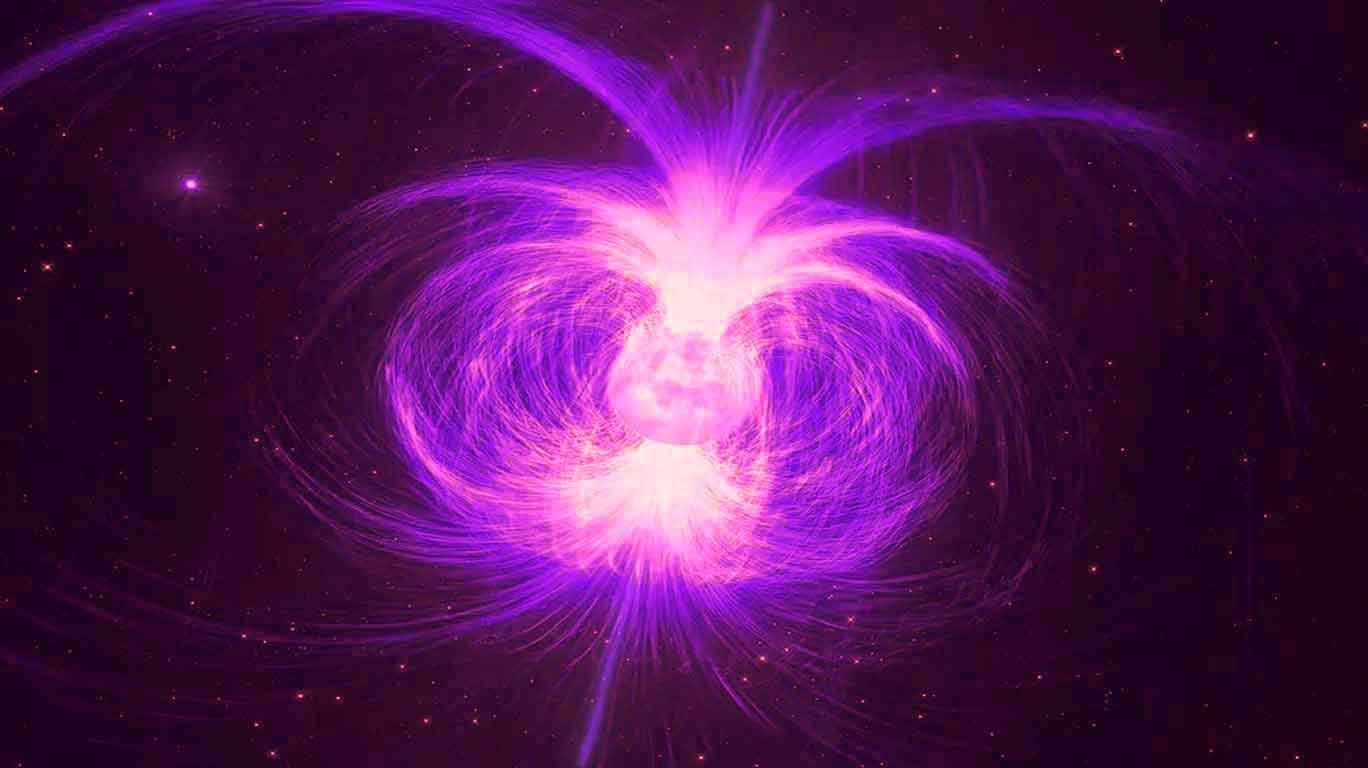
The weird appearance of HD 45166, which had scientists scratching their heads, seems to be because of this magnetic field. Unlike other Wolf-Rayet stars, the material around HD 45166 isn’t escaping into space; it’s trapped by the star’s magnetic grasp. Imagine seeing thick arcs of gas swirling between the star’s poles, colliding in the middle. It’s like a cosmic dance that gives this star its strange look.
Now, brace yourself for the really cool part. When HD 45166 eventually collapses, many millions of years from now, it’s likely to transform into a magnetar. These magnetars are like the rockstars of the star world, boasting the strongest magnetic fields in the universe. While scientists have been scratching their heads about how magnetars are born, the puzzle might have just been solved. If stars similar to HD 45166 can become magnetars, it could be the missing link we’ve been searching for.
But the story doesn’t end here. Shenar and the gang are gearing up for the next steps. They plan to keep their telescopes pointed at the binary system for a few more years to gather more details about the star’s properties and what’s in store for its future. They’re also on the hunt for more of these magnetic helium stars – they believe there could be hundreds of them hanging out in our galaxy. By studying stars at various stages of life, they’re hoping to unlock the secrets of how magnetars are truly born.
So, there you have it – a bunch of scientists digging into the mysteries of a peculiar star and stumbling upon a clue that might finally help us understand those elusive magnetars. It’s like a cosmic detective story that reminds us how much we still have to explore and learn in this vast universe of ours.