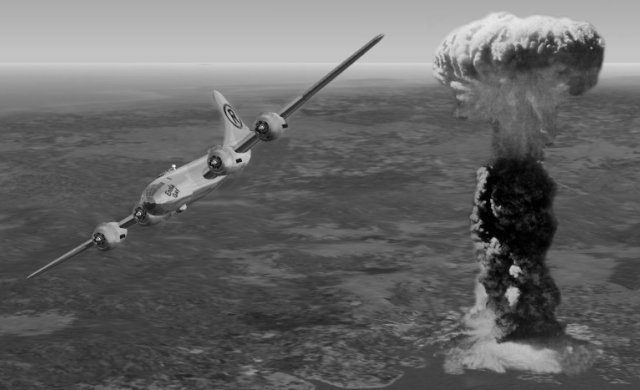
On August 6, 1945, the world (unfortunately) entered the
atomic age. Without warning, a single nuclear bomb on the Japanese city of
Hiroshima killed about 90,000 people instantly and injured many others – who
then died from radiation sickness. Three days later, a second atomic strike on
the city of Nagasaki killed some 37,000 people and injured another 43,000.
Together the two bombs eventually killed an estimated 200,000 Japanese
civilians.
atomic age. Without warning, a single nuclear bomb on the Japanese city of
Hiroshima killed about 90,000 people instantly and injured many others – who
then died from radiation sickness. Three days later, a second atomic strike on
the city of Nagasaki killed some 37,000 people and injured another 43,000.
Together the two bombs eventually killed an estimated 200,000 Japanese
civilians.
“The Library of Congress adds roughly 60 million pages to
its holdings each year, a huge cache of information for the public. However,
also each year, the U.S. Government classifies nearly ten times that amount –
an estimated 560 million pages of documents. For scholars engaged in political,
historical, scientific, or any other archival work, the grim reality is that
most of their government’s activities are secret.” – Richard Dolan, historian,
author (source) (you can read more about what is known as the “black budget”
here)
its holdings each year, a huge cache of information for the public. However,
also each year, the U.S. Government classifies nearly ten times that amount –
an estimated 560 million pages of documents. For scholars engaged in political,
historical, scientific, or any other archival work, the grim reality is that
most of their government’s activities are secret.” – Richard Dolan, historian,
author (source) (you can read more about what is known as the “black budget”
here)
A very important point made above, how can we really know
anything about American history if a significant portion of it remains
classified? That being said, how can we really know anything about American
history when we have so many examples of dishonesty and misinformation? What
will the history books say about 9/11? We will have to wait and see, but what
our history books tell us about the atomic bomb and why it was dropped seems to
be a complete lie, according to what are some very credible sources.
anything about American history if a significant portion of it remains
classified? That being said, how can we really know anything about American
history when we have so many examples of dishonesty and misinformation? What
will the history books say about 9/11? We will have to wait and see, but what
our history books tell us about the atomic bomb and why it was dropped seems to
be a complete lie, according to what are some very credible sources.
We are often taught that yes, use of the atomic bomb was
necessary to end the war with Japan at the earliest possible moment, but
judging by the statements of many high ranking political and military personnel
this is simply not the case.
necessary to end the war with Japan at the earliest possible moment, but
judging by the statements of many high ranking political and military personnel
this is simply not the case.
Here’s what General/President Dwight Eisenhower had to say
about it in his 1963 memoir, The White House Years: Mandate for Change,
1953-1956 (pp. 312-313):
about it in his 1963 memoir, The White House Years: Mandate for Change,
1953-1956 (pp. 312-313):
“Japan was already defeated and that dropping the bomb was
completely unnecessary, and secondly, our country should avoid shocking world
opinion by the use of a weapon whose employment was, I thought, no longer
mandatory as a measure to save American lives. It was my belief that Japan was,
at that very moment, seeking some way to surrender with a minimum loss of
“face.” (source)
completely unnecessary, and secondly, our country should avoid shocking world
opinion by the use of a weapon whose employment was, I thought, no longer
mandatory as a measure to save American lives. It was my belief that Japan was,
at that very moment, seeking some way to surrender with a minimum loss of
“face.” (source)
“The Japanese were ready to surrender and it wasn’t
necessary to hit them with that awful thing… I hated to see our country be the
first to use such a weapon.” (source)
necessary to hit them with that awful thing… I hated to see our country be the
first to use such a weapon.” (source)
Given what I mentioned at the start of this article, I think
it’s also important to note that Eisenhower also said (in his farewell address)
that:
it’s also important to note that Eisenhower also said (in his farewell address)
that:
“In the councils of government, we must guard against the
acquisition of unwarranted influence, whether sought or unsought, by the
military industrial complex. The
potential for a disastrous rise of misplaced power exists, and will persist.
Only an alert and knowledgeable citizenry, can compel the proper meshing of the
huge industrial and military machinery of defense, with our peaceful message
and goals.” (source)
acquisition of unwarranted influence, whether sought or unsought, by the
military industrial complex. The
potential for a disastrous rise of misplaced power exists, and will persist.
Only an alert and knowledgeable citizenry, can compel the proper meshing of the
huge industrial and military machinery of defense, with our peaceful message
and goals.” (source)
Did this “misplaced power” influence the decision to drop
the atomic bomb? It’s impossible to say for sure, but it seems absurd to not
consider the possibility.
the atomic bomb? It’s impossible to say for sure, but it seems absurd to not
consider the possibility.
“Since I entered politics, I have chiefly had men’s views
confided to me privately. Some of the biggest men in the U.S., in the field of
commerce and manufacturing, are afraid of somebody, are afraid of something.
They know that there is a power somewhere so organized, so subtle, so watchful,
so interlocked, so complete, so pervasive, that they had better not speak above
their breath when they speak in condemnation of it.” – Woodrow Wilson, from his
book entitled The New Freedom (1913).
confided to me privately. Some of the biggest men in the U.S., in the field of
commerce and manufacturing, are afraid of somebody, are afraid of something.
They know that there is a power somewhere so organized, so subtle, so watchful,
so interlocked, so complete, so pervasive, that they had better not speak above
their breath when they speak in condemnation of it.” – Woodrow Wilson, from his
book entitled The New Freedom (1913).
Another great example comes from General Douglas MacArthur,
who sent a 40-page memorandum to President Roosevelt that clearly outlines five
different surrender overtures from high ranking Japanese officials. This memo
was also revealed on the front page of the Chicago Tribune and the Washington
Times on August 19th, 1945.
who sent a 40-page memorandum to President Roosevelt that clearly outlines five
different surrender overtures from high ranking Japanese officials. This memo
was also revealed on the front page of the Chicago Tribune and the Washington
Times on August 19th, 1945.
Again, the memo unequivocally states that the Japanese were
offering to surrender. What is even more eye opening is the fact that the surrender
terms were practically identical to what was ultimately accepted by the
Americans after the bomb had dropped. The memo (source) stated these terms:
offering to surrender. What is even more eye opening is the fact that the surrender
terms were practically identical to what was ultimately accepted by the
Americans after the bomb had dropped. The memo (source) stated these terms:
-
Complete surrender of all Japanese forces and arms, at home, on island possessions, and in occupied countries.
- Occupation of Japan and its possessions by Allied troops under American direction.
- Japanese relinquishment of all territory seized during the war, as well as Manchuria, Korea, and Taiwan.
- Regulation of Japanese industry to halt production of any weapons and other tools of war.
- Release of all prisoners of war and internees.
- Surrender of designated war criminals
Japan also made multiple attempts to end the war through
Sweden and Portugal, who were neutral at the time. They also approached Soviet
Russia’s leaders “with a view of terminating the war if possible by September.”
(source)
Here is a quote from Deputy Director of the Office of Naval
Intelligence, Ellis Zacharias:
Intelligence, Ellis Zacharias:
“Just when the Japanese were ready to capitulate, we went
ahead and introduced to the world the most devastating weapon it had ever seen
and, in effect, gave the go-ahead to Russia to swarm over Eastern Asia.
Washington decided that Japan had been given its chance and now it was time to
use the A-bomb. I submit that it was the wrong decision. It was wrong on
strategic grounds. And it was wrong on humanitarian grounds.” (source)
ahead and introduced to the world the most devastating weapon it had ever seen
and, in effect, gave the go-ahead to Russia to swarm over Eastern Asia.
Washington decided that Japan had been given its chance and now it was time to
use the A-bomb. I submit that it was the wrong decision. It was wrong on
strategic grounds. And it was wrong on humanitarian grounds.” (source)
Similarly, Admiral Leahy, Chief of Staff to presidents
Roosevelt and Truman, later commented:
It is my opinion that the use of the barbarous weapon at
Hiroshima and Nagasaki was of no material assistance in our war against Japan…
The Japanese were already defeated and ready to surrender because of the
effective sea blockade and the successful bombing with conventional weapons… My
own feeling was that in being the first to use it, we had adopted an ethical
standard common to the barbarians of the Dark Ages. I was not taught to make
war in that fashion, and wars cannot be won by destroying women and children.”
(source)
Hiroshima and Nagasaki was of no material assistance in our war against Japan…
The Japanese were already defeated and ready to surrender because of the
effective sea blockade and the successful bombing with conventional weapons… My
own feeling was that in being the first to use it, we had adopted an ethical
standard common to the barbarians of the Dark Ages. I was not taught to make
war in that fashion, and wars cannot be won by destroying women and children.”
(source)
There have also been some disturbing remarks like this one:
On September 9, 1945, Admiral William F. Halsey, commander
of the Third Fleet, was publicly quoted extensively as stating that the atomic
bomb was used because the scientists had a “toy and they wanted to try it out…”
He further stated, “The first atomic bomb was an unnecessary experiment… It was
a mistake to ever drop it.” (source)
of the Third Fleet, was publicly quoted extensively as stating that the atomic
bomb was used because the scientists had a “toy and they wanted to try it out…”
He further stated, “The first atomic bomb was an unnecessary experiment… It was
a mistake to ever drop it.” (source)
He said this despite the fact that most prominent scientists
were completely against it. The scientists involved with the Manhattan project
even wrote to the Secretary of Defense to try and encourage him not to drop the
bomb.
were completely against it. The scientists involved with the Manhattan project
even wrote to the Secretary of Defense to try and encourage him not to drop the
bomb.
So ask yourself, why did they really drop the bomb? A number
of theories have been purposed; history.com outlines how it could have been
dropped to demonstrate a new weapon of mass destruction to the Soviets. In
2005, new scientist alluded to the same thing, claiming that it was done to
kick start the Cold War.
of theories have been purposed; history.com outlines how it could have been
dropped to demonstrate a new weapon of mass destruction to the Soviets. In
2005, new scientist alluded to the same thing, claiming that it was done to
kick start the Cold War.
“The conventional wisdom that the atomic bomb saved a
million lives is so widespread that… most Americans haven’t paused to ponder
something rather striking to anyone seriously concerned with the issue: Not
only did most top U.S. military leaders think the bombings were unnecessary and
unjustified, many were morally offended by what they regarded as the
unnecessary destruction of Japanese cities and what were essentially noncombat
populations. Moreover, they spoke about it quite openly and publicly.” Gar Alperovitz, University of Maryland
professor of political economy – and former Legislative Director in the U.S.
House of Representatives and the U.S. Senate, and Special Assistant in the
Department of State (source)
million lives is so widespread that… most Americans haven’t paused to ponder
something rather striking to anyone seriously concerned with the issue: Not
only did most top U.S. military leaders think the bombings were unnecessary and
unjustified, many were morally offended by what they regarded as the
unnecessary destruction of Japanese cities and what were essentially noncombat
populations. Moreover, they spoke about it quite openly and publicly.” Gar Alperovitz, University of Maryland
professor of political economy – and former Legislative Director in the U.S.
House of Representatives and the U.S. Senate, and Special Assistant in the
Department of State (source)
What’s The Point?
What I am trying to do here is get readers to think. If it
was clearly unceccessary to drop the bomb, if it didn’t have to be done, then
what is the justification? Despite the fierce opposition from various military
and political leaders, and the fact that Japan was ready to surrender, it was
still dropped.
was clearly unceccessary to drop the bomb, if it didn’t have to be done, then
what is the justification? Despite the fierce opposition from various military
and political leaders, and the fact that Japan was ready to surrender, it was
still dropped.
War is completely unnecessary, and there are always those
who seem to thrive off of creating conflict. 9/11 is a perfect example, a
supposed “terrorist” attack used to justify the infiltration of the Middle
East.
who seem to thrive off of creating conflict. 9/11 is a perfect example, a
supposed “terrorist” attack used to justify the infiltration of the Middle
East.
There are more oddities, like the information suggesting
that both sides of the war were funded by the same group. You can read more
about that here.
that both sides of the war were funded by the same group. You can read more
about that here.
Have we learned from our mistake? The fact that nuclear
weapons even exist is a discouraging fact, and I am ashamed to be a part of a
race who has developed so many of them. It would be great if we could use our
brilliant minds/science to advance ourselves as a civilization, not destroy it.
weapons even exist is a discouraging fact, and I am ashamed to be a part of a
race who has developed so many of them. It would be great if we could use our
brilliant minds/science to advance ourselves as a civilization, not destroy it.
We need to learn from our history, not accept
textbook explanations that paint a false picture of it. That being said, we
have come a long way since 1945; it’s clear that the majority of people on this
planet prefer to live in a peaceful world, so why are there so many obstacles
in place preventing us from doing so?
textbook explanations that paint a false picture of it. That being said, we
have come a long way since 1945; it’s clear that the majority of people on this
planet prefer to live in a peaceful world, so why are there so many obstacles
in place preventing us from doing so?
(function(i,s,o,g,r,a,m){i[‘GoogleAnalyticsObject’]=r;i[r]=i[r]||function(){
(i[r].q=i[r].q||[]).push(arguments)},i[r].l=1*new Date();a=s.createElement(o),
m=s.getElementsByTagName(o)[0];a.async=1;a.src=g;m.parentNode.insertBefore(a,m)
})(window,document,’script’,’//www.google-analytics.com/analytics.js’,’ga’);
ga(‘create’, ‘UA-64446598-1’, ‘auto’);
ga(‘send’, ‘pageview’);